Older architectural styles common to San Francisco County, such as Victorians in Noe Valley and Edwardians in the Mission District, feature connected floor plates, balloon framing, and raised subfloors that facilitate…
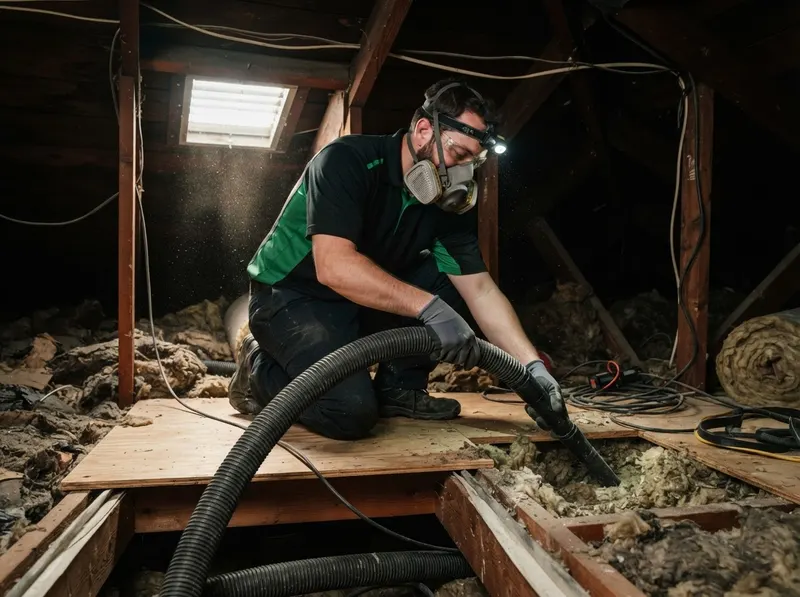
Older architectural styles common to San Francisco County, such as Victorians in Noe Valley and Edwardians in the Mission District, feature connected floor plates, balloon framing, and raised subfloors that facilitate continuous rodent movement. Rattus norvegicus and Rattus rattus consistently compromise subfloor spaces in coastal fog zones like the Sunset District and Richmond District, compressing R-19 fiberglass batting and depositing bio-contaminants that circulate into upper living quarters through the stack effect. In multi-unit buildings throughout SoMa, North Beach, and the Marina District, untreated crawl space droppings dry out and aerosolize, generating indoor particulate triggers that violate local housing habitability baselines.
Structural remediation requires a strict mechanical progression rather than superficial aerosol spraying. Step 1: Technicians establish negative air pressure containment utilizing 2,000-CFM HEPA filtration units to isolate the work zone from interior rooms. Step 2: Saturated, compressed insulation batts are bagged in heavy 6-mil poly sheeting directly within the crawl space or attic to prevent the cross-contamination of finished hallways. Step 3: Subfloor timbers and joists receive a non-corrosive, bio-rational quaternary ammonium antimicrobial wash that neutralizes leptospirosis, hantavirus, and bacterial odors without emitting volatile synthetic chemicals into living spaces. Step 4: Technicians execute structural exclusion using 1/4-inch galvanized steel mesh and non-shrink hydraulic cement across foundation vents, mudsill clearances, and utility penetrations. Complete removal and sanitization suits dwellings with active moisture, heavy urine saturation, or post-infestation odor; spot sanitization without material extraction is appropriate only when bio-deposits are localized to less than 10% of clean insulation surfaces. The operational trade-off centers on upfront remediation costs versus energy efficiency losses, as degraded insulation loses thermal resistance value while continuing to draw pests toward warm subfloor voids.
Scheduling an initial assessment involves direct coordination with an inspector who measures subfloor access points, moisture percentages, and square footage. Homeowners and property managers can reach Kelvex Extermination by calling (628) 277-3081 to arrange the initial on-site physical evaluation.
Every job gets a firm, written price after a free on-site visit.
Tell us about your attic and crawl space insulation sanitation job in San Francisco and we'll send a clear, written quote, usually the same day.
 Kelvex Extermination